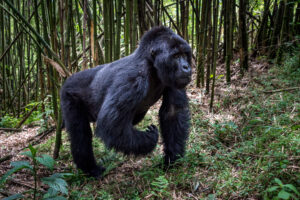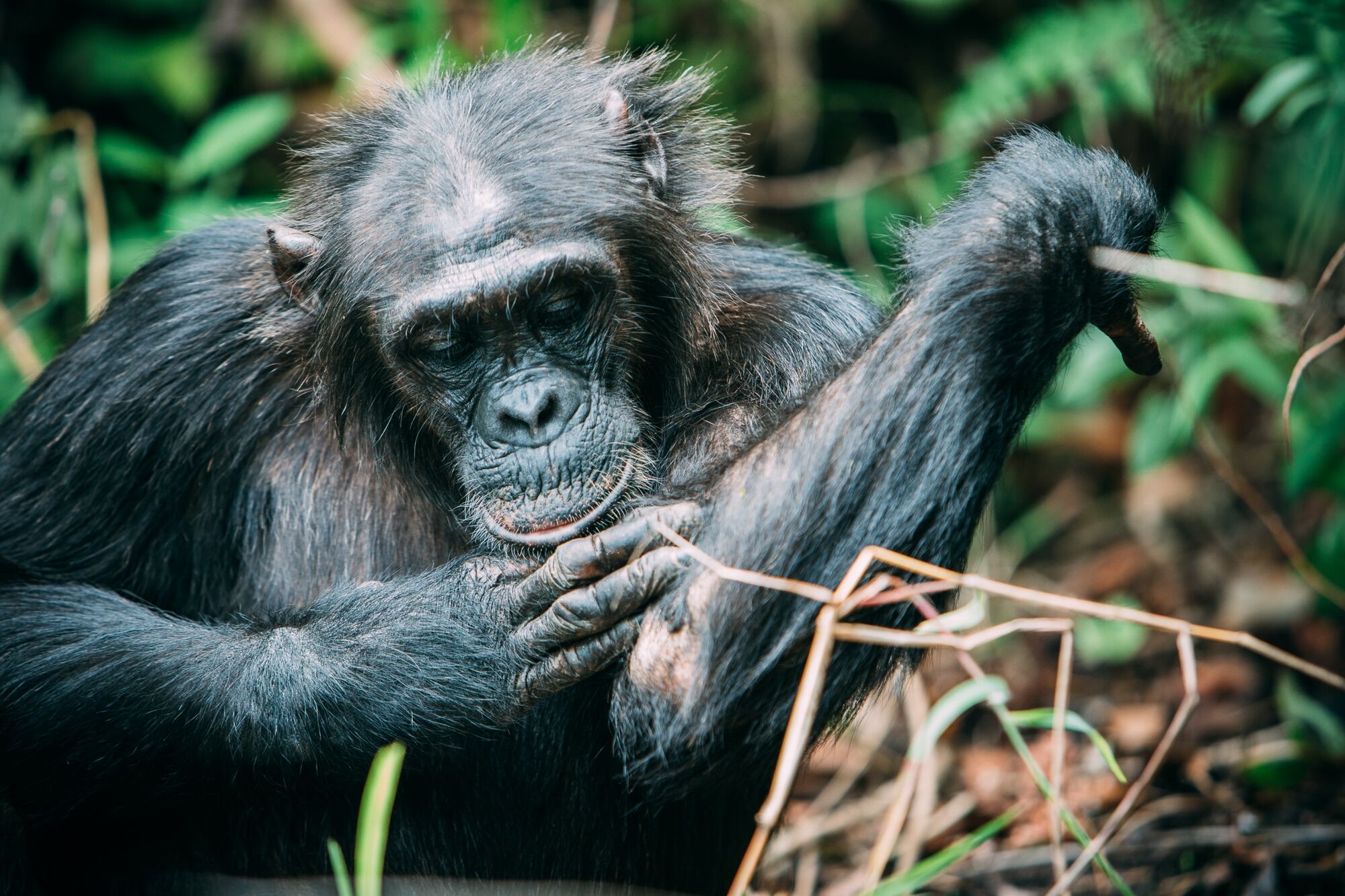

On 14 July 1960, Jane Goodall arrived in what is now Gombe Stream National Park in western Tanzania to begin her pioneering research into wild chimpanzees. World Chimpanzee Day is now marked on that date each year, celebrating the species and drawing attention to its conservation.
For travellers, chimpanzee trekking is quite unlike most other wildlife experiences. The animals may be feeding high in the canopy, resting on the ground or moving rapidly through dense forest. They can be noisy and conspicuous one moment and difficult to see the next. Even among well-habituated communities, every encounter is different.
Two of the finest places we arrange chimpanzee safaris are Tanzania’s Mahale Mountains National Park and Nyungwe National Park in Rwanda. Both offer opportunities to spend time with habituated wild chimpanzees, but the settings, journey and wider experience are markedly different.
Mahale Mountains, Tanzania
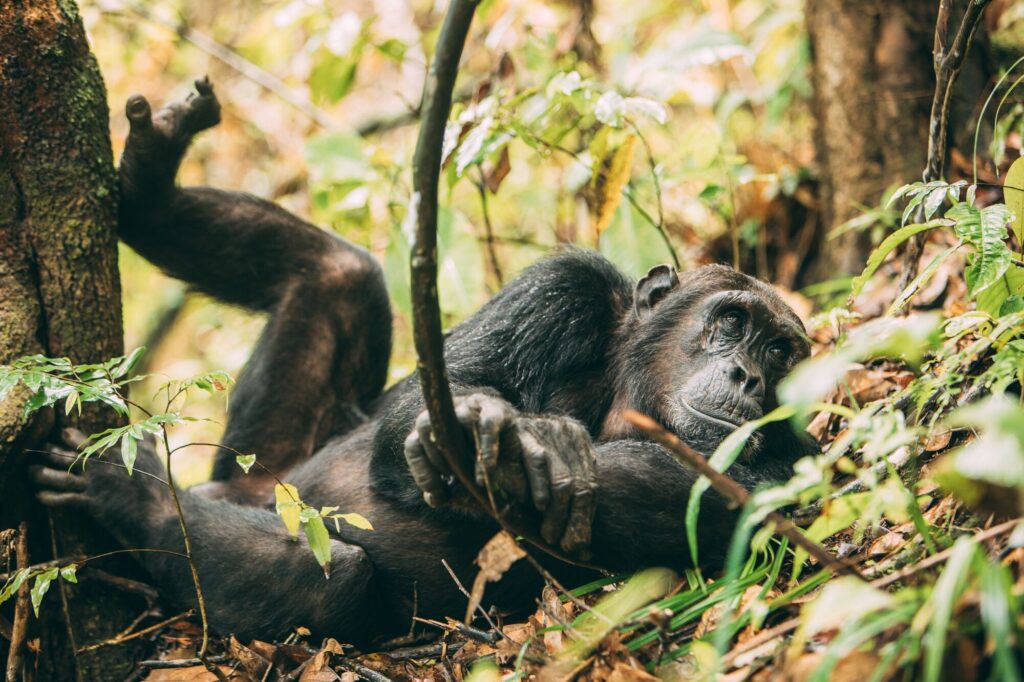
Mahale lies on the eastern shore of Lake Tanganyika in remote western Tanzania. There are no roads through the national park, and visitors usually arrive by light aircraft followed by a boat journey along the lake.
The setting is extraordinary: steep, forested mountains rise behind powder-white beaches on the lakeshore. It is a magical location. So whilst chimpanzee-tracking is the principal reason to visit, the lake and the remoteness are integral to the experience. Time in the forest can be combined with swimming, kayaking, fishing or simply relaxing beside the water.
Research into Mahale’s chimpanzees began in 1965 under Japanese primatologist, the late Toshisada Nishida, and has continued for more than 60 years. The M-group chimpanzees encountered by visitors have been studied and habituated over many decades, allowing researchers and experienced guides to recognise individuals and interpret their relationships, histories and behaviour.
That depth of knowledge can add greatly to a sighting. Rather than watching anonymous animals, you will learn how individuals are related, where they sit within the community and how recent changes have affected its social dynamics and behaviour. It’s rather like watching an episode of a soap-opera, with a long-standing fan who explains the back-story behind each character and interaction. Compelling!
However, Mahale is not quick or inexpensive to reach. Allow yourself a full week there, split between Mahale and the productive, though little-visited, Katavi National Park. Our Chimpanzee Fly-in Safari brings the two together, pairing Mahale’s forest and lakeshore with Katavi’s remote plains and big-game viewing, and makes for a great and very remote safari.
Nyungwe National Park, Rwanda
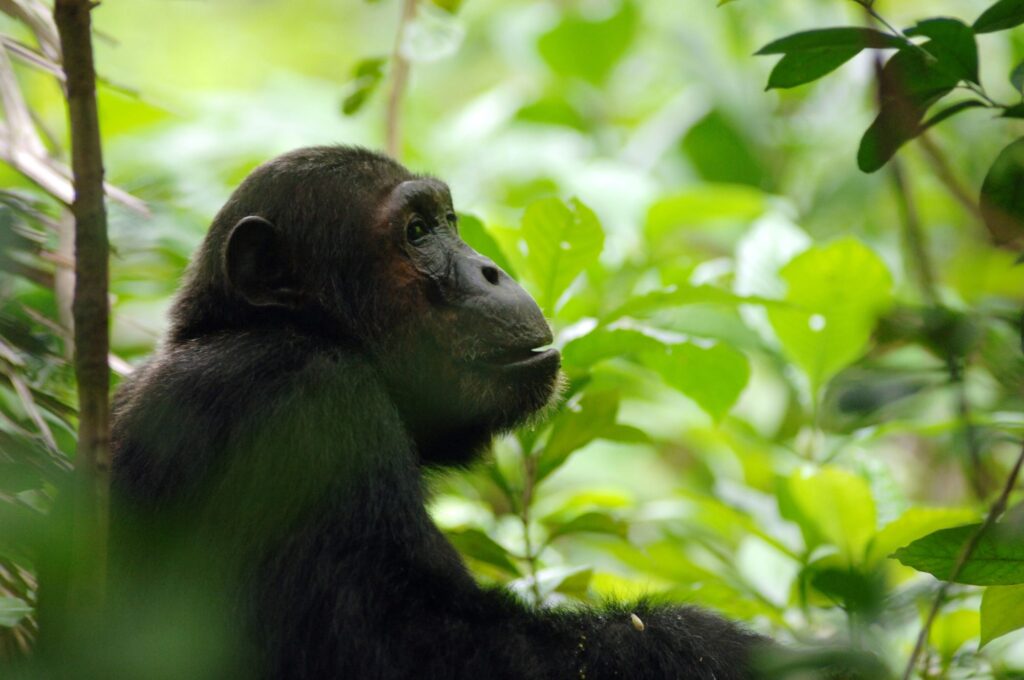
Nyungwe offers a rather different experience. This mountainous rainforest in southwestern Rwanda is home to chimpanzees and 12 other primate species, including L’Hoest’s monkeys and large troops of black-and-white colobus.
Chimpanzee tracking begins early, sometimes from around 5.30am. The length and difficulty of the trek depend on the animals’ location, and the terrain can be steep, muddy and slippery. Once the chimpanzees have been located, visitors may spend up to one hour with them.
Sightings are less predictable than a gorilla encounter. The chimpanzees may remain high in the canopy or move through dense vegetation, although on other days they can descend to the forest floor and offer much closer views. Binoculars are useful, and anyone considering the trek should be prepared for a potentially demanding walk.
Nyungwe’s great advantage is how naturally it can form part of a wider journey through Rwanda. A single itinerary can combine chimpanzees in Nyungwe, mountain gorillas and golden monkeys in Volcanoes National Park, as well as Rwanda’s landscapes and cultural sites. Our L’Hoest’s Monkey Safari is a good example of bringing together all three of these primate encounters in a privately guided trip.
Which experience is right for you?
Mahale is most likely to appeal to adventurous travellers who love the idea of an exceptional wildlife experience in a truly remote and beautiful corner of the world. Its appeal lies as much in Lake Tanganyika, the forest and the sense of isolation as in the chimpanzee experience.
That said, the tracking and guide knowledge here is first-class and makes your time with the chimps compelling and educational. The guide’s commentary on interactions here turns the experience into a fascinating wildlife soap-opera.
Nyungwe, however, is particularly well suited to travellers exploring more broadly. Safaris in Rwanda makes it possible to combine chimpanzees with gorillas, golden monkeys and other primates within one compact country, although the chimp trek itself should not be underestimated. It is considerably easier and quicker to access Nyungwe, and time here works brilliantly for travellers keen to mix both community and conservation experiences.
These are not competing versions though; they are simply two very different safari destinations. Both offering the privilege of observing wild chimpanzees within complex forest communities, the details are what determine which is best for you, and our team are experts in their field at helping travellers decide exactly these kinds of questions.