
We need to talk about the elephant in the room…
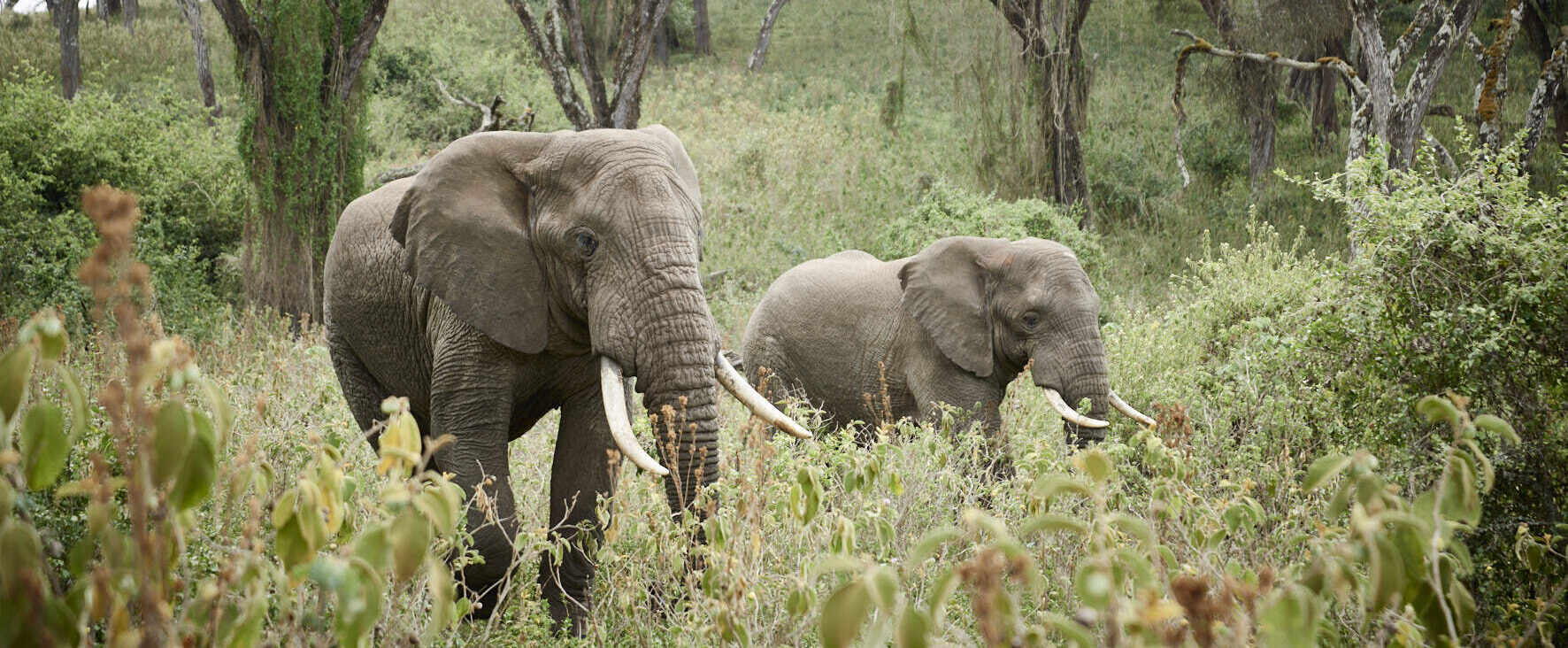
Between 1976 and 2014, Tanzania’s elephant population collapsed from a now almost unimaginable 316,000 to just 43,500. Thanks to improved conservation and anti-poaching efforts, the population now stands at around 60,000, but as numbers rise, so does Human-Elephant Conflict (HEC).
Elephants are driven by an enormous appetite. A healthy adult can consume between 150 and 300 kg of vegetation and 190 litres of water daily, but sadly, climate change and habitat encroachment are increasingly forcing elephants beyond protected areas in search of both, putting nearby villages and farms at risk.
Skilled raiders, elephants can destroy crops, water systems, and livelihoods overnight. Predictably, this provokes human retaliation, including revenge killings. In turn, elephants become more aggressive. Today, they’re among the leading causes of human fatalities in African human-wildlife conflict zones. Breaking this vicious cycle, while protecting both people and pachyderms, remains one of conservation’s toughest challenges.
Now, however, a new solution is emerging — and it hinges on a sound many will recognise: the invasive buzz of a high-tech camera drone.
The power of the buzz
How a drone can tackle a rampaging herd is surprisingly simple. Elephants are terrified of bees and will do almost anything to avoid them. A drone’s swarm-like buzz taps into that fear, prompting elephants to move away.
Modern drones are highly manoeuvrable, allowing skilled pilots to position them just behind an elephant’s ear — effectively its blind spot — and then use them like aerial sheepdogs to guide the elephants back to protected areas. And while elephants typically raid crops at night, the drones’ thermal-imaging cameras make them easy to spot, even when hidden within dense maize fields.
Drones on the frontline
Tanzania’s drone defence force is led by Carel Verhoef, Technical Director at HEC-specialists Kazi Ya Tembo (Swahili for ‘elephant work’). Since 2024, Kazi Ya Tembo (KYT) has used drones to patrol three of the five elephant corridors between Mkomazi National Park and Kenya, and plans to extend coverage to all five. Daily surveillance flights monitor the 250 km zone, and when rogue herds are spotted or villagers raise the alarm, KYZ’s rapid response drone teams are deployed to intervene.
Working alongside Tanzania National Park rangers on the ground, KYT has successfully mitigated 40% of all HEC in the monitoring zone. On average, around 250 elephants are safely guided back to protected areas each month. During one extraordinary five-day operation, five breeding herds — totalling over 150 elephants — were shepherded 70 km from Goha to Mkomazi. Rarely does a night pass without at least one incident, but remarkably, since the project’s inception, there have been no human fatalities.
Meanwhile, similar tactics are also delivering strong results in Kenya’s Maasai Mara, where the Mara Elephant Project’s drones helped prevent 277 HEC incidents in 2025.
Conservation through tourism
News of these successes prompted Mieke Oxener, co-owner of Rhotia Valley Tented Lodge, to contact KYT for help. Situated directly between the village of Marera and the Ngorongoro Conservation Area, the community-focused lodge has long witnessed the conflict between villagers and elephants. Since last September, however, it has hosted and helped fund a KYT drone team, with significant results.
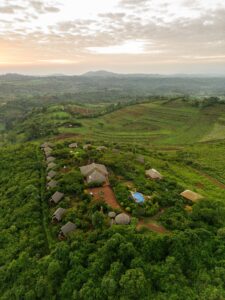
“We’re incredibly close to Ngorongoro. So, for us, conservation is an obligation,” Mieke explains. “The HEC problem in Marera was huge, especially during harvest. Elephants love sugary foods, making the villagers’ maize fields irresistible. For years, farmers slept in their crops to guard them. Each night, they physically chased elephants away, but this created dangerous situations. Sometimes, villagers were killed. Sometimes, elephants were poisoned. Now, that has stopped. One neighbour told me that, thanks to the project, he’s slept properly for the first time in ten years.
“Every night, the pilots survey roughly 20 km², and almost every night they guide elephants back into Ngorongoro. From the drone footage, you can see how peaceful the process is. The drones aren’t stressing the elephants; they’re just helping change their behaviour.”
Changing behaviour on both sides
The Rhotia pilot project is now three-quarters of the way through its year-long run, but in its first four months alone, 286 elephants were successfully intercepted. As with Mkomazi, community engagement has been central to the scheme’s success. KYT works closely with village chiefs to ensure the technology is understood and accepted. Now, when elephants are spotted, villagers call the pilots rather than trying to intervene themselves.
Through these collaborations, KYT hopes to reshape how communities view elephants. Part of that conversation involves ensuring elephants have safe access to alternative water sources, thereby reducing the risk of them heading to communities’ water points.
“Our aim is to show sensitivity to the elephants’ needs, with as little human interaction as possible,’ Mieke says. “In a way, we’re teaching them: we don’t want you in this area, but there’s a good alternative over there.”
Breeding herds tend to respond quickly to protect their young. Bachelor herds, especially those led by a dominant bull, can be more stubborn. In those cases, pilots can play louder deterrent sounds through the drone’s speaker to trigger a flight response.
“The elephants are definitely learning,” Mieke adds. “They’re incredibly intelligent — you can almost see them thinking ‘What is this?’ But the drones are evolving, too, so we can stay one step ahead.”
Looking ahead
Meanwhile, the surveillance flights are gathering valuable ecological data, and revealing migration patterns and key pinch points where conflict is most likely to occur, helping KYT to learn where and when to increase its presence. The elephants’ primary drivers are clear: water during the dry season and sugar-rich maize at harvest time.
Each drone costs $12,000, but if the trial continues to deliver results, Mieke hopes to expand the programme significantly.
“Right now, we have two KYT pilots and several trainees. But ultimately, we’d like four or five ranger units, each with two drones, providing round-the-clock coverage across the Ngorongoro conflict areas,” she explains. “So, the next step is finding additional sponsors so we can scale up the operation.”
Mieke also hopes to build an elephant conservation information centre at Rhotia.
“Guests are fascinated by what’s happening here, and so are the local children,””” she says. “The little boys, especially, are completely captivated by the pilots and their drones. You can see their minds whirring. Hopefully, we’re inspiring the next generation of conservationists.”
© Abigail Flanagan
Want to see the drone team in action?
To find out more about Rhotia Valley Tented Lodge and Ngorongoro, chat to one of our specialists.
You can learn more about Kazi Ya Tembo’s work and how to support the drone initiatives here, and follow Carel on LinkedIn for daily updates from the field.