
There’s an incredible natural spectacle coming to Africa next year, and this one has nothing to do with wildebeest, whales or wildlife.
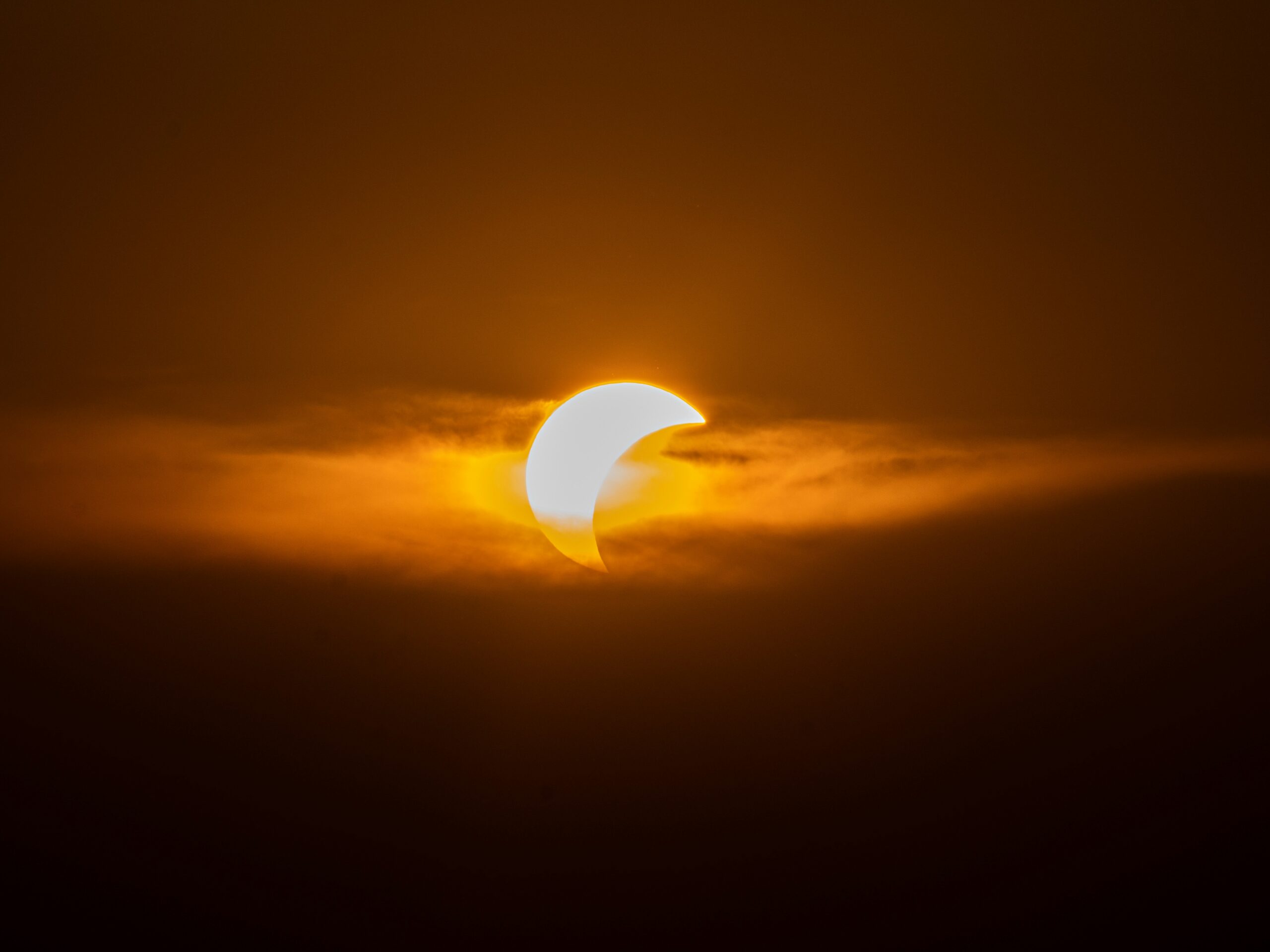
On Monday 2 August 2027, the Moon will pass directly between Earth and the Sun, casting its shadow across a vast sweep of the planet. For those fortunate enough to be standing in the right place, the result will be a solar eclipse lasting more than six minutes, exceptionally long for a total eclipse. And Africa will be right beneath it.
Where will the total eclipse be visible?
The narrow path of totality begins over the Atlantic, crosses southern Spain and then sweeps across North Africa through Morocco, Algeria, Tunisia, Libya and Egypt.
It continues across the Red Sea into Saudi Arabia and Yemen before eventually reaching Somalia.
At its longest point, totality will last approximately six minutes and 23 seconds. That’s the headline-grabbing eclipse. But the Moon’s shadow doesn’t simply stop at the edge of that narrow band.
Across a much larger area, including many parts of Africa, observers will see a partial solar eclipse, with the Moon appearing to cover part of the Sun.
What will you see on safari?
For most of the safari destinations we cover, this is emphatically not a total eclipse.
That’s an important distinction.
East Africa will, however, see a noticeable partial eclipse around the middle of the day.
In Tanzania the partial eclipse begins from around lunchtime, depending on location. On Zanzibar, for example, it is expected to begin at about 1.10pm, reach its maximum at around 2.13pm and finish shortly after 3pm.
Kenya will also experience a partial eclipse, with timings and the proportion of the Sun obscured varying considerably according to where you are.
Further south the effect diminishes. Zambia catches only the edge of the event, so we wouldn’t suggest planning a Zambian safari around it.
But in parts of East Africa, if you’re already out on safari on 2 August, it’s certainly worth knowing what’s happening overhead.
How do wildlife react to a solar eclipse?
Perhaps the most intriguing question for anyone on safari is not simply what the eclipse will look like, but whether the animals will notice.
Solar eclipses offer scientists a rare natural experiment: daylight suddenly changes at entirely the wrong time of day. During total eclipses, researchers have recorded some remarkable responses. Elephants have headed towards their nighttime quarters, birds have fallen silent and gone to roost, and nocturnal species have stirred into activity. Research during the 2024 total eclipse in North America found that more than half of the wild bird species studied changed their normal rhythms, with some even producing a second ‘dawn chorus’ as daylight returned.
A partial eclipse is a rather different proposition. Recent research suggests that the most dramatic changes occur when the Sun is almost completely obscured, so we certainly wouldn’t promise a Serengeti suddenly behaving as though night had fallen.
But that’s part of the fascination. On 2 August, it will be worth paying attention not only to the sky, but to what’s happening around you. Does the bush sound subtly different? Do animals become more active, seek shelter or begin their evening routines early? Or does life simply carry on as normal?
For anyone interested in wildlife, that uncertainty is part of what could make an already unusual afternoon in the bush even more intriguing.
A bonus in an already excellent safari month
August needs little help as a time to visit East Africa.
It’s dry season across much of Kenya and Tanzania, with wildlife gathering around reliable water sources and vegetation generally becoming thinner.
It’s also Great Migration season in the Serengeti–Mara ecosystem. Precisely where the herds will be on a particular day is, of course, impossible to predict, that’s the nature of a migration involving well over a million wild animals. However, August is traditionally associated with the northern Serengeti and the Mara River.
Add a partial solar eclipse to the mix and 2 August 2027 could be an especially memorable day to be in the bush.
We’d regard the eclipse as a bonus rather than a reason to choose East Africa: anyone whose priority is experiencing the drama of totality should be planning to be within the much narrower path across northern Africa.
Planning for August 2027
There is, however, another good reason to be thinking about it now.
August is peak safari season in Kenya and Tanzania. Smaller camps, particular family rooms and some of the best private guides and vehicles can be booked a long way ahead.
So if East Africa is already on your wish list for summer 2027, now is a very sensible time to start planning.
Come 2 August, you might just get an extra celestial show thrown in.